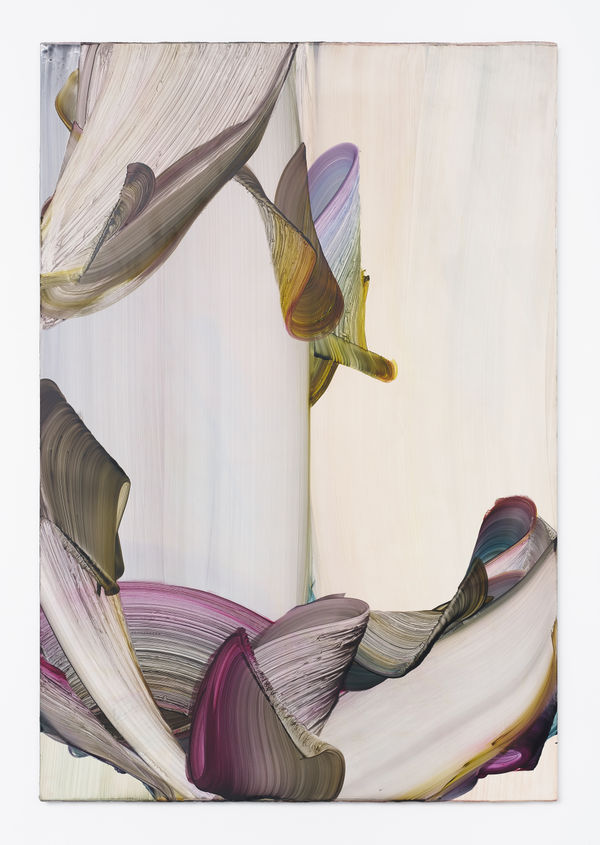
Markus Saile : Drifters

z2o Project is pleased to present Drifters, the first solo exhibition of Markus Saile (Stuttgart, Germany, 1981) at its space in Via Baccio Pontelli 16, in collaboration with A+B gallery, Brescia.
[1] Marie de Brugerolle, “Edge to Edge”, Mai 36 Galerie, 2022.
[2] See Nicolas Largier, „Die Falte. Barocke Figuration bei Gilles Deleuze und Walter Benjamin.”, in: Frühe Neuzeit – Späte Neuzeit. Phänomene der Wiederkehr in Literaturen und Künsten ab 1970, Berlin 2011, pp. 218-219.
Il termine “Drifters” indica persone o entità che si muovono nello spazio, fermandosi di tanto in tanto senza una meta o un'intenzione precisa. Ciononostante, essi sono caratterizzati da un certo senso di autodeterminazione, soprattutto quando se ne considerano le varie incarnazioni cinematografiche. In pittura, il termine può riferirsi sia a forme e gesti che sembrano fluttuare nello spazio pittorico, sia ai dipinti stessi, intesi come oggetti che si collocano di volta in volta in spazi espositivi diversi, dando vita a costellazioni sempre nuove.
Per Drifters, Markus Saile ha concepito un allestimento come installazione di nuove opere in dialogo diretto con lo spazio fisico e le sue caratteristiche specifiche. Fondamentale è la relazione tra l’architettura, i formati dei supporti e i parametri spaziali interni alle immagini, così come le aree marginali, i bordi, i vuoti e le sovrapposizioni. Questi elementi attivano connessioni e rimandi tra le singole opere, dando vita a una sintassi aperta di frammenti e a uno spazio poetico fatto di riferimenti incrociati.
I “Pipe Paintings” costituiscono un nucleo concettuale di opere con cui l’artista interviene in questo campo d’azione in modo specifico. Attraverso il loro formato allungato, esplorano il confine tra immagine e oggetto. Il termine inglese 'Pipe' corrisponde al carattere tipografico della barra verticale, oggi ampiamente utilizzato nella scrittura informale legata alla cultura digitale. In senso generale, questo simbolo segna la fine di una sezione e l’inizio di un’altra. È una cesura — un taglio — che al tempo stesso rivela una connessione.
«Le opere di Saile convocano lo spazio pittorico, in un sottile gioco tra lo spazio in cui sono collocate, quello che rappresentano e quello costruito dialogando con l’architettura». In questo senso, «lo spazio di mezzo, ovvero tra un dipinto e l’altro, diventa uno spazio politico: è lì che ci troviamo e ci muoviamo, come spettatori. I problemi pittorici possono essere letti come problemi architettonici, intesi come struttura sociopolitica. Oltre la logica dell’in-situ e del contesto, si sviluppa un’indagine sulla pittura come volume, sulla profondità della superficie e sull’estensione di questa pratica verso un campo d’azione performativo.»[1]
I dipinti prendono forma attraverso un processo di stratificazione, fatto di velature sottili e sovrapposizioni di colore che ne rivelano la dimensione materiale. I depositi di pittura che si accumulano ai bordi dei supporti lasciano emergere la struttura temporale del processo pittorico — come gli anelli di crescita di un albero — conferendo alle opere una qualità materica. Interventi gestuali enfatizzano lo spazio pittorico come fosse una scena teatrale. In questo senso, il lavoro concettuale sul gesto pittorico può essere letto come una sorta di rievocazione performativa dei suoi potenziali storici, temporali e spaziali.
Nel suo processo pittorico, Saile costruisce il volume attraverso il movimento del pennello, analogamente al procedimento di estrusione nei programmi di modellazione 3D. Invece di unire una serie di punti per formare una linea, come avviene nel disegno prospettico, il gesto del pennello genera un piano in un unico movimento. In un gruppo di opere, queste forme sembrano fluttuare davanti a spazi quasi neutri, come se fossero ritagliate, o meglio: come dei “drifters”. Tutto questo richiama quella che è stata definita la logica neobarocca dello spazio digitale decentrato, in cui i confini vengono costantemente riscritti e lo spettatore è coinvolto nell’evento dell’immagine, nei suoi ripiegamenti e dispiegamenti.[2]
[1] Marie de Brugerolle, “Edge to Edge”, Mai 36 Galerie, 2022.
[2] Vedi Nicolas Largier, “Die Falte. Barocke Figuration bei Gilles Deleuze und Walter Benjamin.”, in: Frühe Neuzeit – Späte Neuzeit. Phänomene der Wiederkehr in Literaturen und Künsten ab 1970, Berlino 2011, pp. 218-219.
For further press material please contact info@z2ogalleria.it.
INFO:
Markus Saile | Drifters
Opening: Tuesday, October 7, 2025 | 6–9 PM
October 7 > November 15, 2025
z2o Project, Via Baccio Pontelli 16, 1st Floor – 00153 Rome
Opening hours: From Tuesday to Saturday | 12 - 7 PM
T. +39 06 80073146 | info@z2ogalleria.it
-
 Installation View | Markus Saile, Drifters, z2o Project, 2025.
Ph. Dario Lasagni -
Markus Saile, Untitled, 2025, oil on wood, cm 115 x 151
Ph. Dario Lasagni
-
Installation View | Markus Saile, Drifters, z2o Project, 2025.
Ph. Dario Lasagni -
Installation View | Markus Saile, Drifters, z2o Project, 2025.
Ph. Dario Lasagni -
Markus Saile, Untitled, 2025, oil on wood, cm 23,5 x 49
Ph. Dario Lasagni
-
Installation View | Markus Saile, Drifters, z2o Project, 2025.
Ph. Dario Lasagni -
Installation View | Markus Saile, Drifters, z2o Project, 2025.
Ph. Dario Lasagni -
Installation View | Markus Saile, Drifters, z2o Project, 2025.
Ph. Dario Lasagni -
Markus Saile, Untitled, 2023, oil on wood, cm 107 x 69
Side view
Ph. Dario Lasagni
-
Installation View | Markus Saile, Drifters, z2o Project, 2025.
Ph. Dario Lasagni -
Markus Saile, Pipe#50, 2025, oil on wood, cm 200 x 13
Side view
Ph. Dario Lasagni
-
Markus Saile, Pipe#50, 2025, oil on wood, cm 200 x 13
Detail
Ph. Dario Lasagni
-
Installation View | Markus Saile, Drifters, z2o Project, 2025.
Ph. Dario Lasagni -
Markus Saile, Untitled, 2025, oil on wood, cm 171 x 117
Side view
Ph. Dario Lasagni
-
Installation View | Markus Saile, Drifters, z2o Project, 2025.
Ph. Dario Lasagni -
Installation View | Markus Saile, Drifters, z2o Project, 2025.
Ph. Dario Lasagni -
Markus Saile, Untitled, 2025, oil on wood, 42,5 x 38,5
Side view
Courtesy of the artist and z2o Sara Zanin


-
Markus Saile, Untitled, 2025, oil on wood, cm 171 x 117
Courtesy of the artist and z2o Sara Zanin
-
Markus Saile, Untitled, 2025, oil on wood, cm 171 x 117
Side view
Ph. Dario Lasagni
-
Markus Saile, Pipe#50, 2025, oil on wood, cm 200 x 13
Courtesy of the artist and z2o Sara Zanin
-
Markus Saile, Pipe#50, 2025, oil on wood, cm 200 x 13
Side view
Ph. Dario Lasagni
-
Markus Saile, Pipe#50, 2025, oil on wood, cm 200 x 13
Detail
-
Markus Saile, Untitled, 2023, oil on wood, cm 107 x 69
Courtesy of the artist and z2o Sara Zanin
-
Markus Saile, Untitled, 2023, oil on wood, cm 107 x 69
Side view
Ph. Dario Lasagni
-
Markus Saile, Untitled, 2025, oil on wood, 50,5 x 37,5
Courtesy of the artist and z2o Sara Zanin
-
Markus Saile, Pipe#51, 2025, oil on wood, cm 200 x 13
Ph. Dario Lasagni
-
Markus Saile, Pipe#51, 2025, oil on wood, cm 200 x 13
Side view
Ph. Dario Lasagni
-
Markus Saile, Pipe#51, 2025, oil on wood, cm 200 x 13
Detail
-
Markus Saile, Untitled, 2025, oil on wood, cm 23,5 x 49
Ph. Dario Lasagni
-
Markus Saile, Untitled, 2025, oil on wood, cm 23,5 x 49
Side view
Ph. Dario Lasagni
-
Markus Saile, Untitled, 2025, oil on wood, cm 115 x 151
Ph. Dario Lasagni
-
Markus Saile, Untitled, 2025, oil on wood, cm 115 x 151
Side view
Ph. Dario Lasagni
-
Markus Saile, Untitled, 2025, oil on wood, 42,5 x 38,5
Courtesy of the artist and z2o Sara Zanin
-
Markus Saile, Untitled, 2025, oil on wood, 42,5 x 38,5
Side view
Courtesy of the artist and z2o Sara Zanin
-
Markus Saile, Untitled, 2025, oil on wood, 42,5 x 38
Ph. Dario Lasagni
-
Markus Saile, Untitled, 2025, oil on wood, 42,5 x 38
Side view
Ph. Dario Lasagni