Luca Parise | Surface, Friends, Fantasy: Surface, Friends, Fantasy

z2o Project is pleased to present Surface, Friends, Fantasy, the first solo exhibition by Luca Parise (Paris, 1991) in Rome, at the gallery space on Via Baccio Pontelli 16, curated by Enrico Camprini.
The three words that give this exhibition its title, placed side by side almost as an unordered list, began to surface with a certain frequency in the conversations that Luca Parise and I have been carrying on since our first and, all things considered, chance encounter about a year ago, between Versilia and the Apuan Alps. Their recurrence does not turn them into key concepts for framing a practice or, as if that were of any use, into guidelines for explaining what the artist does. Rather, I see in them a sincere and meaningful catalytic value: a trigger for the relationship between each individual work and its viewer, and for the sketch of a narrative toward which the exhibition gravitates, without ever confirming or denying it. Surface, Friends, Fantasy will recur throughout this brief text as well – words that one hopes might activate imaginaries and open up perspectives, rather than articulate a fully-fledged argument. What might appear to be a problem – an undulating, perhaps unsystematic practice – is in fact the most compelling element of Parise’s work. Whether through an installation-based approach or, as in this case, a more distinctly sculptural one, the artist moves according to a kind of felicitous improvisation. This improvisation translates into the work as a sum of material, formal, and compositional decisions that largely resist any predefined script – one that only later, and only in our eyes, seems to emerge.
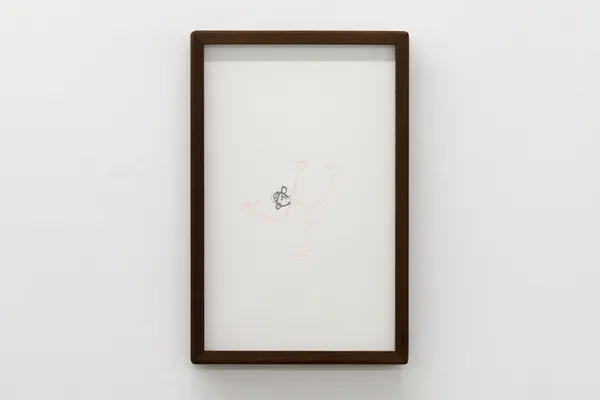
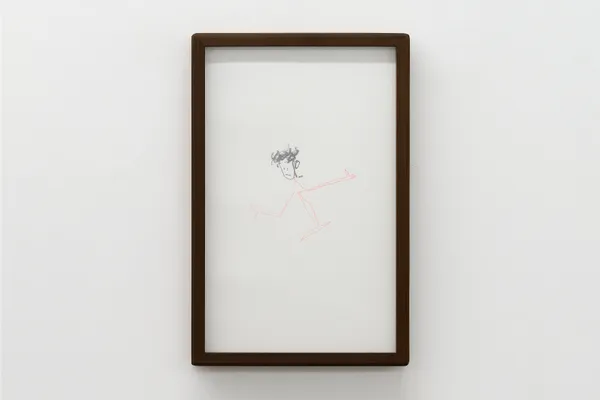
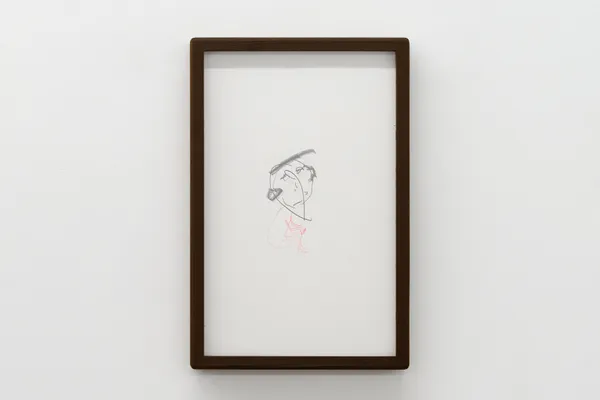
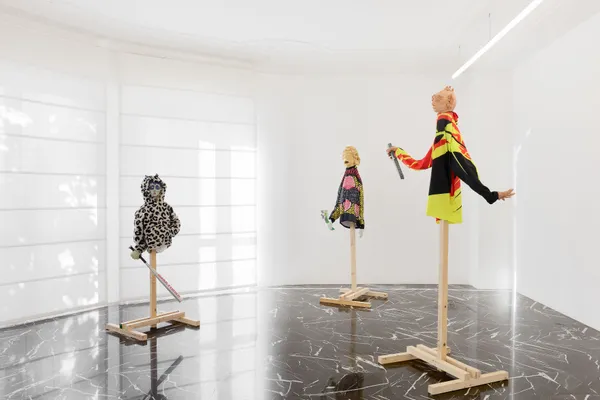
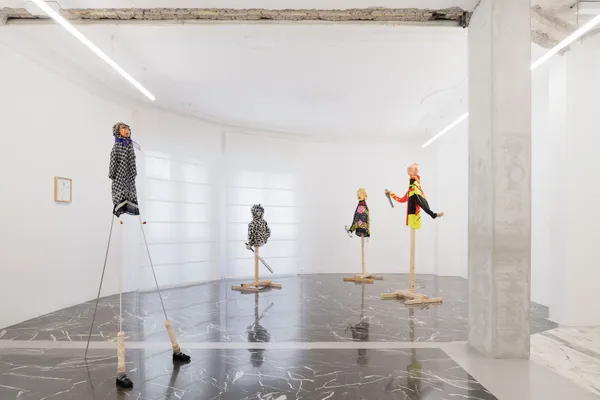
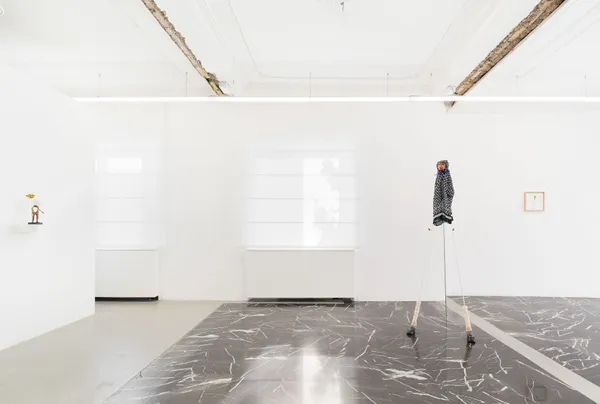
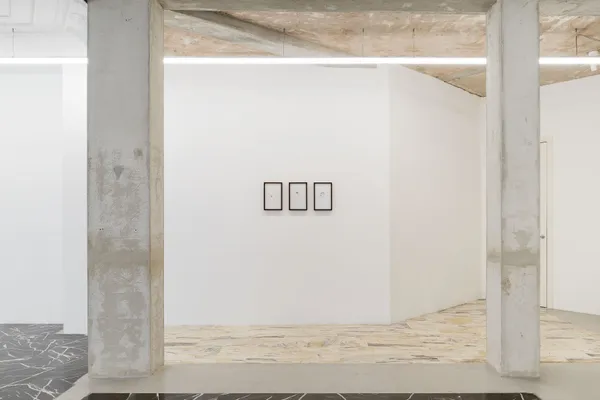
Thus the exhibition itself takes shape: a group of sculptures and a group of drawings, clearly interrelated, to the point of suggesting an intention to evoke a narrative that encompasses them – the humanoid figures tower in space, bearing proper names and assigned genders, forming a cast of characters seemingly in dialogue – yet at the same time the exhibition withholds the coordinates that might orient such a story. It is up to us, should we feel the need, to imagine the reasons and meanings behind this curious sculptural assembly, whose members in fact each stand on their own; each endowed with peculiarities and details that, rather than functioning as elements of a hypothetical plot, are quite concretely the outcome of a compositional exercise carried out by the artist through trial and error. Within these variations on the human figure, the drawings do not play an ancillary or preparatory role, but rather a complementary one to the sculptures – constituting a parallel offshoot of that same felicitous improvisation that characterizes Parise’s current practice. Among the numerous and at times markedly different drawings, there is a small series in which the figure, always solitary, seems to come into being almost through a single stroke: a linear annotation that delicately suggests the essential traits of a body, with a distinct predilection for the careful rendering of small faces. The name given to this fragile figurative synthesis, in its variations, is Nefelibata – literally “cloud-walker” – a poetic term of Portuguese origin and Greek derivation referring to a dreamer, or more generally to someone who stands outside conventional frameworks.
On further reflection, “walking among the clouds” is a curious expression. Its meaning, of course, does not stray far from the more common “having one’s head in the clouds,” yet I find that its suggestion of a certain movement – an activity that is, par excellence, a matter of surface – produces an oxymoron capable of leading us, lightly, to the heart of the matter. Parise’s attitude – sufficient to account for the works we see – stems from a balance between the need to find an anchorage in the things of the world and the desire to reimagine them, between surface and fantasy. Indeed, any artistic practice can only situate itself between these two poles, especially for a generation such as ours; and equally true is the difficulty of finding that balance. A fantasy that does not lapse into escapism and derealization; an adherence to the world that does not reduce it to normative didacticism.
In any case, what interests the artist in things is what is quite literally superficial – commonplace, to borrow a term from Arthur Danto – that is, banal, trivial, and certainly lacking in depth from the standpoint of a thematically and intellectually “engaged” practice. If some years ago he created bizarre installations of a double nature (an exhibition space shaped like a sauna, a semi-automatic “drawing machine”), and if we now find ourselves before works that recall both mannequins and theatrical props, yet present themselves as autonomous sculptures, it is because, for Parise, the dimension of fantasy acts directly upon that flat and modest surface – activating it so as to produce images that are unexpected and, in some way, persuasive.
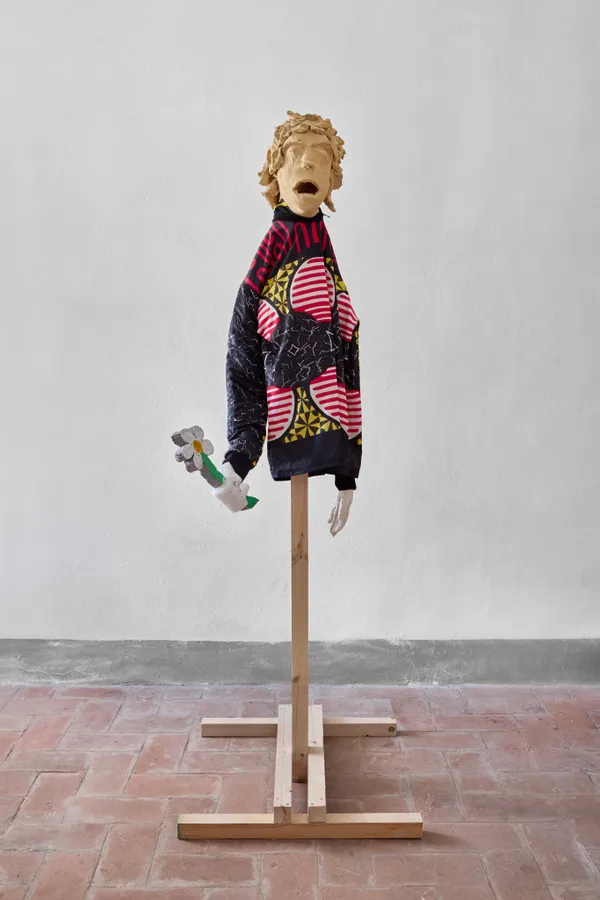
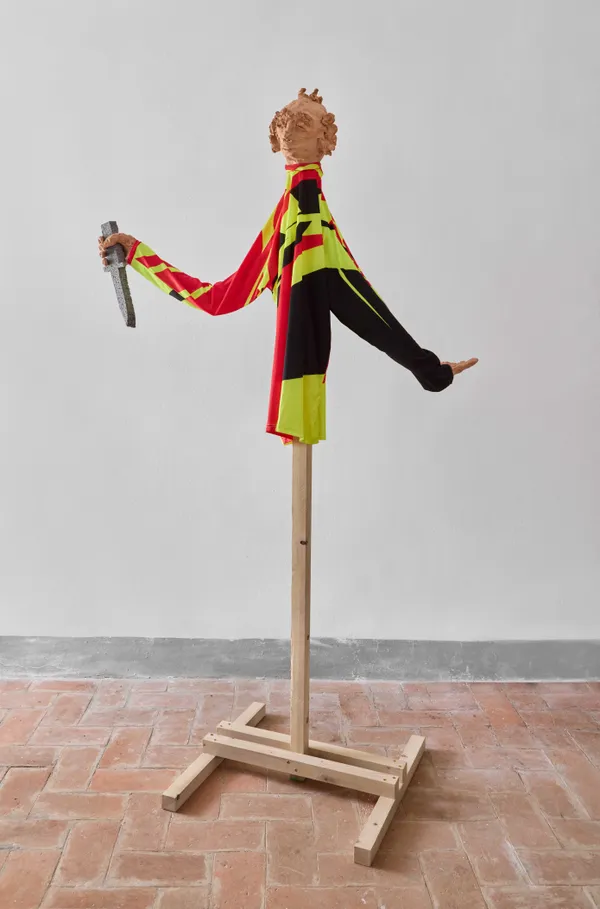
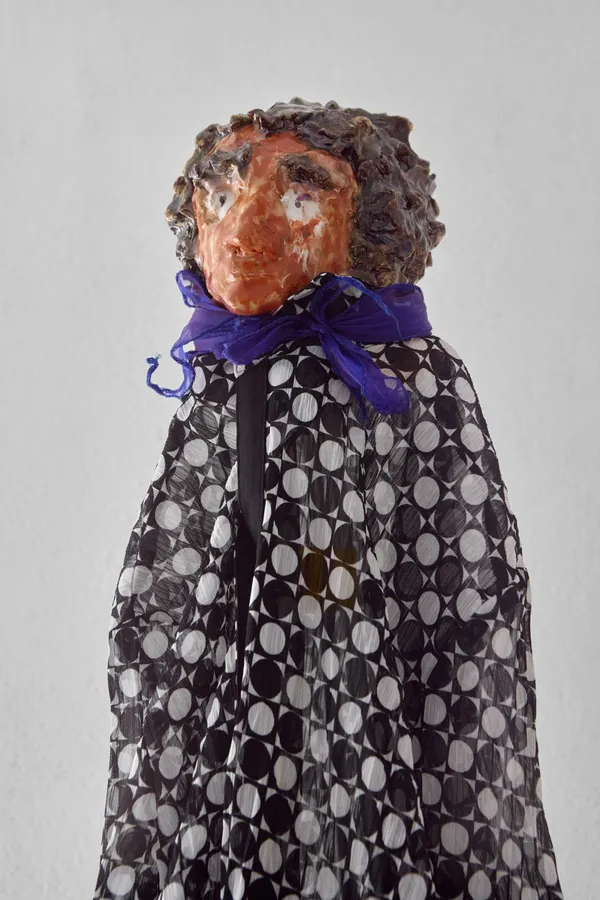
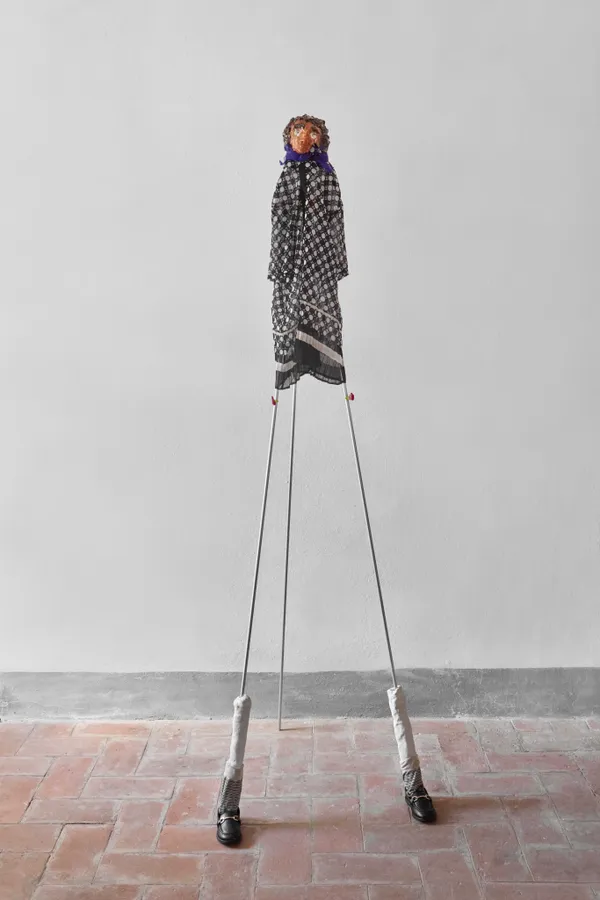
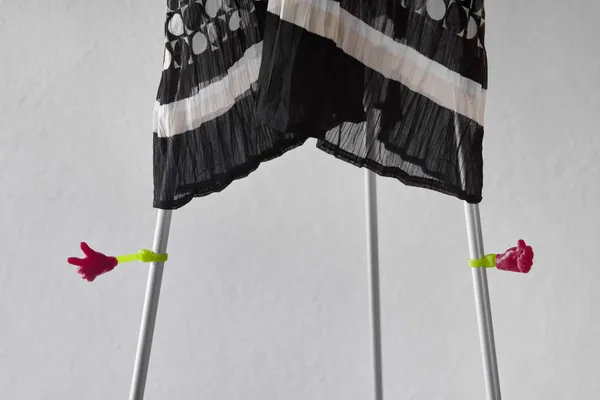
Fantasy recombines the surface; it rearranges it. In this sense, retrospectively, we might think of the sculptures in the exhibition as a hypothetical group of friends. Born as individual experiments in composing the human figure, I first encountered them gathered for purely practical reasons of space in the artist’s bedroom. Yet he also said he wanted them all there with him, as though their mutual existence required validation by his own gaze. Conceived in solitude, they become not a series but a group, insofar as they share not only formal traits but, above all, a peculiar emotional consistency – a disquieting sense of “humor”. Manuela, a comical and lugubrious giantess wearing dainty ladies’ shoes and little red hands modeled with the wax that coats Babybel cheeses; Cacciatore celeste (Parise is fond of the books of Roberto Calasso), with his sly smile, a flashy motocross jersey, and a menacing – if hardly convincing – large knife, paired with Marco, who instead brandishes a flower, clutching it as though it were the last thing left to him, his face – absurd as it may sound – relaxed into a lament. The group is completed by Charlotte, a scowling humanoid who seems to have stepped out of a cyberpunk video game, wielding a baseball bat – this one genuinely threatening – onto which a large sticker bearing the name of Mark Fisher has been affixed, as if she were ready to strike us all down with blows of “theory”.
What remains, finally, to be examined in this exhibition is the attention devoted to faces. A common denominator of both drawings and sculptures, they appear to be the element from which Parise’s practice – whether in the modeling of matter or in graphic line – takes its departure; or perhaps the opposite is true, and we might imagine them instead as the point of arrival of an entire compositional process. I am reminded of a well-known text by Antonin Artaud on the inexhaustible and tragic multiformity of the face, which “has not yet found its own visage […] has never corresponded to its own body but has from the very beginning been something other.”
I cannot help but think that, within this play of assemblages and juxtapositions, the faces of the artist’s sculptures can only be provisional – masks whose names serve merely as a pretext, each time, for ensnaring the viewer’s gaze.
Enrico Camprini
Le tre parole che danno titolo a questa mostra, affiancate a mo’ di elenco senza ordine di rilevanza, hanno fatto capolino con una certa frequenza nelle conversazioni che Luca Parise ed io abbiamo portato avanti sin dal nostro primo, e tutto sommato casuale, incontro di circa un anno fa tra la Versilia e le Alpi Apuane. Il ripetersi di queste tre parole non le trasforma in concetti chiave utili a inquadrare una pratica in sé o, come se servisse a qualcosa, in linee guida per poi spiegare quel che l’artista fa: credo piuttosto in un loro sincero e significativo valore d’innesco per il rapporto tra le singole opere e chi le guarda, e per l’abbozzo di un’idea di narrazione a cui la mostra tende senza conferme né smentite. Superficie, Amici, Fantasia anche in questo breve testo ricorreranno come parole auspicabilmente capaci di attivare immaginari e offrire punti di vista, ma non di articolare un vero e proprio discorso. Quello che potrebbe sembrare un problema – una pratica ondivaga e forse asistematica – costituisce invece l’elemento più interessante dei lavori di Parise. Che sia attraverso un approccio installativo o, in questo caso, più pienamente scultoreo, l’artista si muove assecondando una sorta di felice improvvisazione che si traduce nell’opera come somma di scelte materiali, formali e compositive perlopiù estranee a un canovaccio predefinito che solo in un secondo momento, e solo ai nostri occhi, pare trapelare.
Così si compone la mostra stessa: un gruppo di sculture e uno di disegni in evidente relazione tra loro, tale da lasciarci pensare all’intenzione di suggerire un racconto che li coinvolga – le figure umanoidi svettano nello spazio, con nomi propri e rispettivo genere, in un gruppo di personaggi in dialogo – ma al tempo stesso manca di fornircene le coordinate. Sta a noi, se lo riteniamo necessario, immaginare ragioni e significati di questa strana assemblea scultorea i cui membri fanno in realtà storia a sé; ciascuno con peculiarità e dettagli che, più che elementi di un’ipotetica narrazione, sono assai concretamente il risultato di un esercizio compositivo portato avanti dall’artista per prove ed errori. In queste variazioni sul tema della figura umana i disegni hanno un ruolo non accessorio o preparatorio, ma complementare alle sculture, nel senso di una biforcazione parallela di quell’attitudine all’improvvisazione felice che connota l’attuale pratica di Parise. Tra numerosi e talvolta molto differenti disegni c’è una piccola serie in cui la figura, sempre sola, viene alla luce quasi per un singolo tratto, come un appunto lineare che con delicatezza suggerisce i caratteri essenziali di un corpo, con una netta predilezione alla cura delle fisionomie di piccoli volti. Il nome di questa fragile sintesi figurativa, nelle sue variazioni, è Nefelibata – letteralmente “camminatore di nuvole” – termine poetico di origine portoghese e derivazione greca che indica una persona sognatrice o in generale fuori dagli schemi.
A ben pensarci, “camminare tra le nuvole” è una formula curiosa; ovviamente il suo significato non si discosta dal più comune “avere la testa tra le nuvole”, ma trovo che l’allusione a un certo movimento – per eccellenza attività di superficie – generi un ossimoro in grado di portarci con leggerezza al cuore della questione. L’attitudine di Parise, tanto basta per rendere conto delle opere che vediamo, è frutto di un equilibrio tra l’esigenza di trovare un ancoraggio alle cose del mondo e il desiderio di reimmaginarle, tra superficie e fantasia. Del resto, è vero che qualunque pratica artistica non può che collocarsi tra questi due poli, specie in una generazione come la nostra, e altrettanto vera è la difficoltà nel trovare il suddetto equilibrio. Fantasia che non si traduca in escapismo e derealizzazione, aderenza al mondo senza ridurlo a normativi didascalismi.
In ogni caso, delle cose all’artista interessa ciò che è letteralmente superficiale, commonplace per dirla con Arthur Danto, cioè banale, triviale e certo poco profondo nell’ottica di una ricerca tematicamente e intellettualmente “engaged”. Se anni fa realizzava bizzarre installazioni dalla duplice natura (uno spazio espositivo in forma di sauna, una “macchina da disegno” semi automatica) e ora ci troviamo davanti a lavori che ricordano tanto manichini quanto props teatrali, e pur si presentano come sculture autonome, è perché per Parise la dimensione della fantasia agisce direttamente su quella della piatta e dimessa superficie, attivandola per produrre immagini inattese e in qualche modo persuasive.
La fantasia ricombina la superficie, la riordina. In questo senso, a posteriori, possiamo pensare alle sculture in mostra come a un ipotetico gruppo di amici: nate come singoli esperimenti di composizione della figura, le ho viste per la prima volta raggruppate per mere ragioni di spazio nella camera da letto dell’artista. Diceva però anche di volerle tutte assieme con sé, come se dovesse validarne al suo sguardo la reciproca esistenza. Nate sole, diventano non serie ma gruppo, poiché condividono non solo caratteri formali ma soprattutto una strana consistenza emotiva, un senso di humor perturbante. Manuela, buffa e lugubre gigantessa con scarpette da signora e manine rosse modellate con la cera che ricopre i formaggini Babybel; Cacciatore celeste (Parise ama i libri di Roberto Calasso) con un sorriso sornione, sgargiante maglia da motocross e minaccioso, quanto poco convincente, coltellaccio fa coppia con Marco, che brandisce invece un fiore e lo stringe come se fosse l’ultima cosa che gli resta, con il volto – assurdo a dirsi – disteso in un lamento. Chiude il gruppo Charlotte, corrucciata umanoide che pare uscita da un videogioco cyberpunk, con la sua mazza da baseball – questa sì, minacciosa – su cui è incollato un grosso sticker con il nome di Mark Fisher, quasi fosse pronta a prenderci tutti a colpi di theory.
Di questa mostra rimane da interrogare, infine, l’attenzione ai volti. Comune denominatore di disegni e sculture, sono l’elemento da cui la pratica di Parise – nella modellazione della materia e nel tratto grafico – sembra prendere le mosse; oppure può essere vero il contrario e immaginarlo come punto di arrivo di tutto un processo compositivo. Mi torna in mente un famoso testo di Antonin Artaud sull’inesauribile e tragica multiformità del volto che «non ha ancora trovato la propria faccia […] non ha mai corrisposto al proprio corpo, ma è stato sin dall’inizio qualcosa di diverso». Non riesco a non pensare che, nel gioco di assemblaggi e giustapposizioni, i volti delle sculture dell’artista non potranno che essere provvisori, delle maschere il cui nome non è che un pretesto per intrappolare di volta in volta lo sguardo.
Enrico Camprini
For further press material please contact info@z2ogalleria.it.
INFO:
Luca Parise | Surface, Friends, Fantasy
curated by Enrico Camprini
Opening Friday February 20th, 2026 | 6-9 pm
February 20 → April 11, 2026
z2o Project, via Baccio Pontelli 16, 1st Floor – 00153 Rome
Opening hours: from Thursday to Saturday | 12-7 pm
T. +39 06 80073146 | info@z2ogalleria.it
-

Installation View | Luca Parise, Surface, Friends, Fantasy, z2o Sara Zanin, 2026
Ph. Roberto Apa
-
Installation View | Luca Parise, Surface, Friends, Fantasy, z2o Sara Zanin, 2026
Ph. Roberto Apa
-
Installation View | Luca Parise, Surface, Friends, Fantasy, z2o Sara Zanin, 2026
Ph. Roberto Apa
-
Installation View | Luca Parise, Surface, Friends, Fantasy, z2o Sara Zanin, 2026
Ph. Roberto Apa
-
Installation View | Luca Parise, Surface, Friends, Fantasy, z2o Sara Zanin, 2026
Ph. Roberto Apa
-
Installation View | Luca Parise, Surface, Friends, Fantasy, z2o Sara Zanin, 2026
Ph. Roberto Apa

-
Luca Parise, Charlotte (She/her), 2025, Glazed ceramic, pen, clothes, bubble wrap, pine wood, baseball bat with "MARK FISHER" sticker, cm 165(h) x 77 x 85, Detail
Courtesy of the artist and z2o Sara Zanin, Ph. Camilla Maria Santini -
Luca Parise, Charlotte (She/her), 2025, Glazed ceramic, pen, clothes, bubble wrap, pine wood, baseball bat with "MARK FISHER" sticker, cm 165(h) x 77 x 85
Courtesy of the artist and z2o Sara Zanin, Ph. Camilla Maria Santini -
Luca Parise, Charlotte (She/her), 2025, Glazed ceramic, pen, clothes, bubble wrap, pine wood, baseball bat with "MARK FISHER" sticker, cm 165(h) x 77 x 85, Detail
Courtesy of the artist and z2o Sara Zanin, Ph. Camilla Maria Santini -
Luca Parise, Marco (he/him), 2025, Bisque-fired ceramic, gold, acrylic paint, Polyethylene and polystyrene foam, vintage shirt, aluminum, wood, pins and bubble wrap, cm 190(h) x 77 x 77
Courtesy of the artist and z2o Sara Zanin, Ph. Camilla Maria Santini -
Luca Parise, Marco (he/him), 2025, Bisque-fired ceramic, gold, acrylic paint, Polyethylene and polystyrene foam, vintage shirt, aluminum, wood, pins and bubble wrap, cm 190(h) x 77 x 77, Detail
Courtesy of the artist and z2o Sara Zanin, Ph. Camilla Maria Santini -
Luca Parise, Cacciatore celeste, 2024/25, Bisque-fired ceramic, styrofoam, Acerbis T-shirt, aluminum, wood, elastic, bubble wrap, cm 205 (h) x 170 x 67
Courtesy of the artist and z2o Sara Zanin, Ph. Camilla Maria Santini -
Luca Parise, Manuela (she/her), 2024/25, Bisque-fired ceramic, glazed ceramic, aluminium, babybell wax, shirt, scarf, sock, and shoes, cm 210 (h) x 60 x 80, Detail
Courtesy of the artist and z2o Sara Zanin, Ph. Camilla Maria Santini -
Luca Parise, Manuela (she/her), 2024/25, Bisque-fired ceramic, glazed ceramic, aluminium, babybell wax, shirt, scarf, sock, and shoes, cm 210 (h) x 60 x 80
Courtesy of the artist and z2o Sara Zanin, Ph. Camilla Maria Santini -
Luca Parise, Manuela (she/her), 2024/25, Bisque-fired ceramic, glazed ceramic, aluminium, babybell wax, shirt, scarf, sock, and shoes, cm 210 (h) x 60 x 80, Detail
Courtesy of the artist and z2o Sara Zanin, Ph. Camilla Maria Santini -
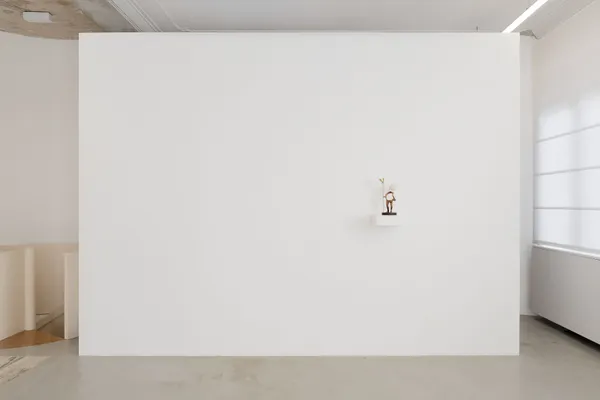
Luca Parise, Meteor (they/them), 2025, Garden butterfly, copper sculpture with an iron base and bisque-fired porcelain, cm 30 (h) x 15 x 15
Courtesy of the artist and z2o Sara Zanin, Ph. Roberto Apa -
Luca Parise, Nefelibata III, 2025, graphite on Fabriano paper, cm 34.5 x 22.5
Courtesy of the artist and z2o Sara Zanin, Ph. Roberto Apa -
Luca Parise, Nefelibata II, 2025, graphite on Fabriano paper, cm 34.5 x 22.5
Courtesy of the artist and z2o Sara Zanin, Ph. Roberto Apa -
Luca Parise, Nefelibata I, 2025, graphite on Fabriano paper, cm 34.5 x 22.5
Courtesy of the artist and z2o Sara Zanin, Ph. Roberto Apa -
Luca Parise, C., 2025, Graphite and watercolor on Hahnemühle aquarell paper 425gr/m2, cm 30 x 30
Courtesy of the artist and z2o Sara Zanin, Ph. Roberto Apa -
Luca Parise, Lorenzo, 2025, Graphite and watercolor on Hahnemühle aquarell paper 425gr/m2, cm 30 x 30
Courtesy of the artist and z2o Sara Zanin, Ph. Roberto Apa -
Luca Parise, Cris, 2025, Graphite and watercolor on Hahnemühle aquarell paper 425gr/m2, cm 30 x 30
Courtesy of the artist and z2o Sara Zanin, Ph. Roberto Apa