Silvia Camporesi: Uno Strappo nel Cielo di Carta
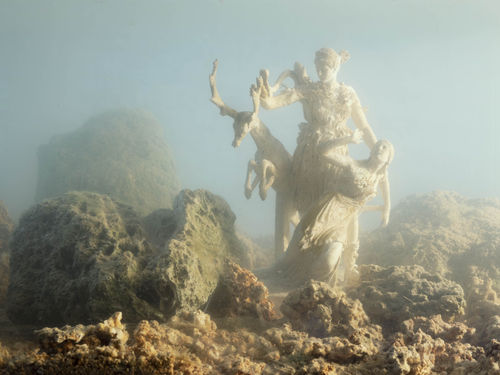
z2o Sara Zanin is pleased to present Uno strappo nel cielo di carta, a solo exhibition by Silvia Camporesi (Forlì, 1973), this time invited to engage with the gallery’s space at Via Alessandro Volta 34.
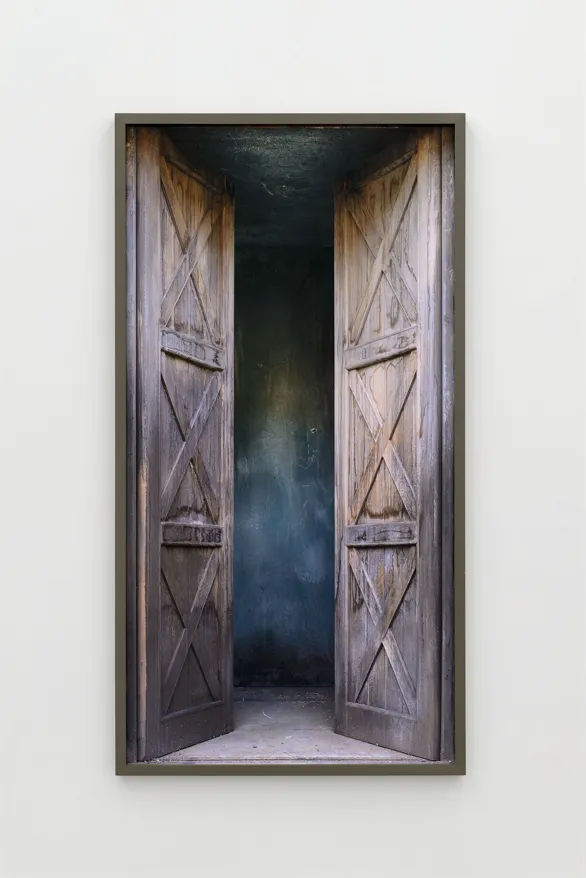
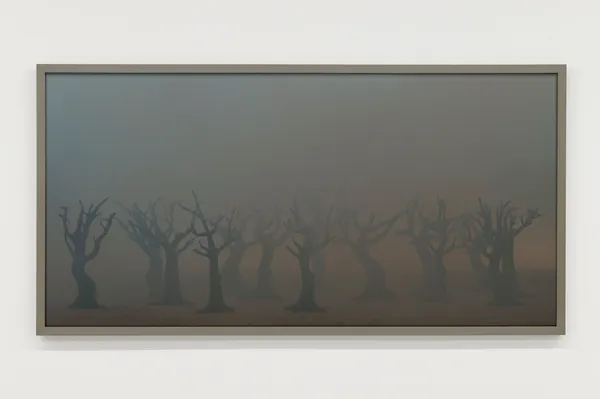
A literary sense of romanticism pervades the mysterious and rarefied atmospheres of Silvia Camporesi's new photographic work. Portraits of unknown places overshadowed by silence are revealed in their perishable vulnerability—a massive door in dim light, a forest of bare trees, secret underground cavities, submerged ancient ruins. They possess something familiar, reminding us of similar places we have visited or experienced, perhaps only seen in films. Gazing at their beauty is unsettling; the solitude emanating from these spaces devoid of human presence cloaks them in unspoken questions: our initial impression of wonder comes with a feeling of decadence that creates a subtle unease that cannot be rationally explained.
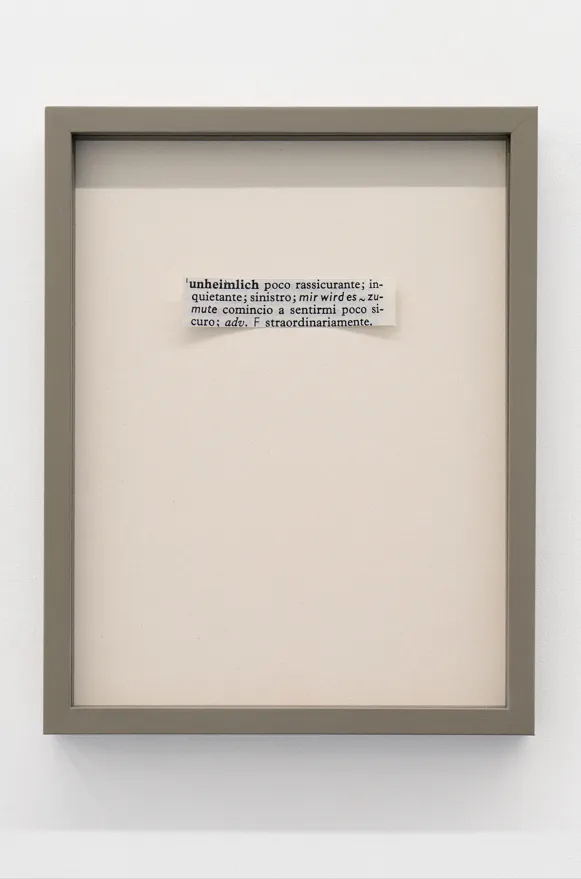
Silvia Camporesi's exhibition Uno strappo nel cielo di carta (A rip in the paper sky) explores the modern feeling of alienation at the dawn of an era so complex it often gives us a feeling of unheimlich, a German expression used to describe the conflicting feeling that arises when the familiar (heimlich) suddenly shows its hidden, threatening counterpart.
Inspired by a famous metaphor Luigi Pirandello provided in Il fu Mattia Pascal, the title of the exhibition suggests the crisis in certainties in his own time and the breakdown of social conventions in nineteenth-century Man.
Camporesi brings this symbolic ‘rupture’ into the contemporary world to illustrate the fracture now forming between the event and its representation that is often supported by media narratives so distorted as to appear familiar, or in other words, reassuring and disturbing at the same time. Whatever appears familiar today also carries in equal measure a sense of the unnatural, something disturbing or too extreme that troubles our perception of reality.
The paper sky Silvia refers to in her new production can therefore be identified in the visual rhetoric and political use that is regularly made of photographic and film images, their instrumentalization in creating belief or disbelief in the appearance of reality. Media representation saturates with other content the truth that the photographic image—a messenger of reality—carries in itself, its revelatory gradient often submerged beneath a plethora of added signs and meanings that lay a thick blanket of fictions and illusions. Second only to the word, photography has become the most familiar language we now have for communication. As the most highly visual culture in human history (the most robotized by technology), we take photos without understanding their oracular nature also as an index of removal.
More attention goes to appearances and narratives while continuing to believe in images nonetheless. Precisely for this reason, art has the arduous task of opposing the illusion of objectivity in photography, creating instead disturbing images that are authentically capable of transcending the realm of the visible. This is how Silvia Camporesi investigates the unexpressed nature of places and things, what remains liminal and uncertain, hidden beneath the blanket of evidence and rhetoric. Thanks to a conceptual use of photographic language, she explores those latent and enigmatic images that unsettle our vision even while ostensibly showing the world in its normality. The artist has augmented her practice in this direction by combining it with theoretical and speculative research on the value of photography in a series of significant publications, such as her latest book, Una foto è una foto è una foto (A photo is a photo is a photo) (Einaudi, 2025).
One of the effective stratagems our psyche devises to manage personal experiences is undoubtedly the uncanny, a conflicting inner movement that starts when something welcoming and close to us is perceived as hidden, unfamiliar, and emotional disturbance is generated as a result.
The first to identify the mechanism of uncanniness was the German psychologist Ernst Jentsch in 1906. The concept was later developed by Sigmund Freud in his 1919 essay of the same name, Das Unheimlich (The Uncanny). Freud used this term to describe the unease that assails us when we feel we can no longer control a thing we previously believed securely established and known but which now instead reveals itself as uncertain, liable to upset our balance and how we interpret reality.
If heimlich is whatever is familiar but kept hidden or repressed, unheimlich is the return of the repressed, its unveiling. Therein lies its uncomfortable and anxiety-inducing nature.
The uncanny does not respect psychological boundaries; it tends to force certainties and shatter apparent reality by confusing images and confronting people with their fears. It is a sensation that generates wonder, subverts the rules of rationality, and constitutes the artistic, symbolic, and shadowy dimension of our unconscious. It produces a rupture of meaning, which both frightens and attracts, incessantly deconstructing and reconstructing our experience in relation to the world.
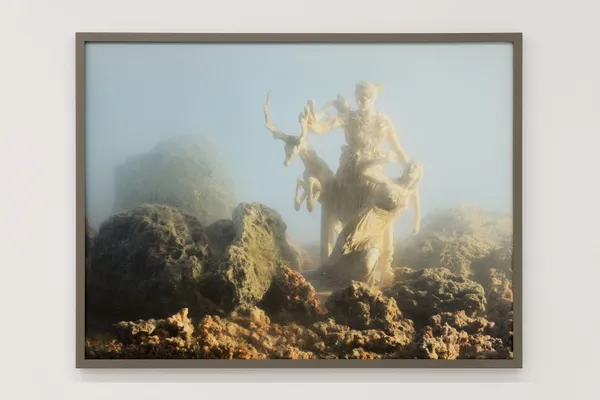
The uncanny feeling evoked by Silvia Camporesi's works stems from the device of placing observers before something of a cognitive paradox, in which they feel uncertain of what they are looking at but cannot decide whether what they see is real or not. Such is the case with the Onferno Grotto photographs: mysterious details of indefinable underground caves, or the After Baia portrait of a submerged archaeological site faithfully reconstructed by the artist on the basis of archive photographs that lend an aura of ambiguity.
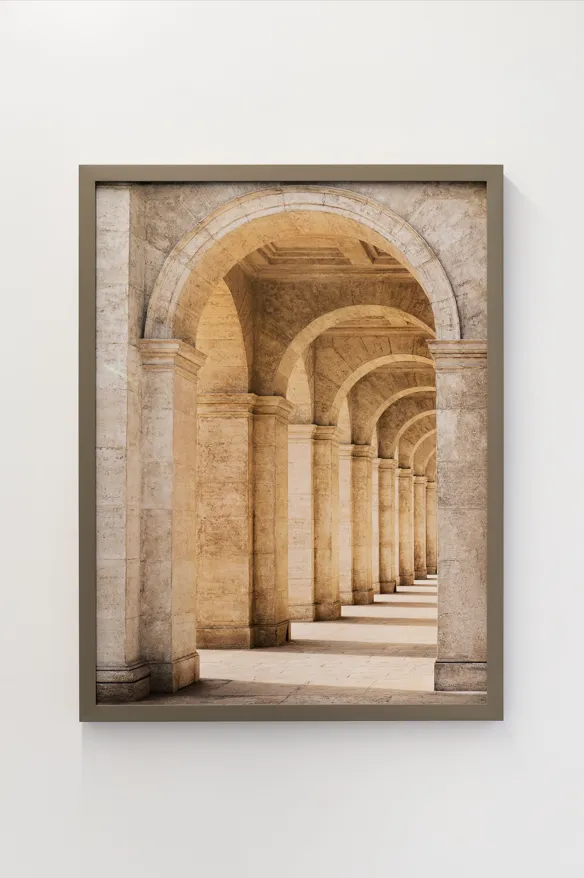
On the other hand, the Shimmering Cinecittà series photographs show buildings of antique feel, elegant in their monumental silence, inhabitants of an immemorial landscape to which we see no particular reference. Looking at them makes us shudder: our doubts about their reality grow step by step with the non-existence of these fictitious places (they are stage backdrops). Inhabited only momentarily for the duration of a film, they continue to linger on in our memory even afterwards as latent images. This new society “[...] will no longer be found in any place or time, but in surfaces made of images.”[1].
The oblivion of our time, which looks so much to the past in order to retain and not disperse the meaning of humanity, is the effect of being inundated with too many images of the world. It alienates our gaze and leaves us uncertain, uneasy in the face of a predictable but uncontrolled present.
[1] Vilém Flusser, Immagini. Come la tecnologia ha cambiato la nostra percezione del mondo, Fazi, Roma 2009
Marinella Paderni
Un senso letterario del romantico pervade le atmosfere misteriose e rarefatte dei nuovi lavori fotografici di Silvia Camporesi. Sono ritratti di luoghi ignoti, adombrati dal silenzio, che si mostrano nella loro peritura vulnerabilità - un portone nella penombra, un bosco di alberi brulli, delle cavità segrete del sottosuolo, delle rovine antiche sommerse. Possiedono qualcosa di familiare, ci ricordano luoghi simili che abbiamo visitato e vissuto, o anche solo visti nei film. La loro bellezza inquieta lo sguardo, la solitudine emanata da questi spazi privi di presenza umana li ammanta di domande taciute: un senso del decadente accompagna l’impressione iniziale del meraviglioso, generando un sottile turbamento a cui non sappiamo dare una risposta razionale.
La mostra Uno strappo nel cielo di carta di Silvia Camporesi esplora il sentimento moderno del perturbante alle soglie di un’epoca così complessa da procurarci spesso una sensazione di unheimlich, locuzione tedesca per indicare quel sentimento conflittuale che si genera quando il familiare (heimlich) rivela all’improvviso la sua controparte nascostamente minacciosa.
Il titolo della mostra è ispirato da una celebre metafora di Luigi Pirandello, scritta ne Il fu Mattia Pascal, a suggerire la crisi delle certezze del suo tempo e la rottura delle convenzioni sociali nell’uomo ottocentesco.
Uno “strappo” simbolico traslato nella contemporaneità da Camporesi per comunicare la frattura che si è formata oggi tra l’evento e la sua rappresentazione, sostenuta spesso da una narrazione mediatica contraffatta a tal punto da apparire familiare, rassicurante e inquietante allo stesso tempo; oggi ciò che appare conosciuto tradisce in egual misura un senso di innaturale, di disturbante, di eccessivo che turba la percezione della realtà.
Il cielo di carta, a cui si riferisce la nuova produzione di Silvia Camporesi, può essere allora identificato nella retorica visiva e nell’uso politico che si fa delle immagini fotografiche e filmiche, strumenti di un discorso sul credere o meno all’apparenza del reale. La rappresentazione mediatica ha saturato di altri contenuti la verità che ogni immagine fotografica porta con sé in quanto indizio del reale; il suo gradiente rivelatorio è spesso inabissato sotto una pletora di segni e significati aggiunti che creano una fitta coltre di finzioni e illusioni. La fotografia è diventata il linguaggio più familiare che abbiamo per comunicare dopo la parola. Siamo la prima cultura massimamente visuale della storia umana (e la più robotizzata dalla tecnologia), pratichiamo la fotografia senza comprenderne anche la sua natura oracolare di indice del rimosso. Ci si sofferma più sulle sue apparenze, sulle sue narrazioni, continuando a credere alle immagini malgrado tutto. Proprio per questo l’arte ha il compito arduo di opporsi all’illusione dell’oggettività della fotografia realizzando invece delle immagini perturbanti, autenticamente capaci di andare al di là della soglia del visibile. È così che Silvia Camporesi indaga l’inespresso dei luoghi e delle cose, ciò che resta liminale e incerto, celato sotto la coltre dell’evidenza e della retorica. Grazie a un uso concettuale del linguaggio fotografico, l’artista esplora quelle immagini latenti ed enigmatiche che inquietano il nostro vedere, anche quando sembrano mostrare in apparenza la normalità del mondo. In questa direzione ha potenziato la sua pratica artistica affiancandole la ricerca teorica e speculativa sul valore della fotografia con una serie di significative pubblicazioni, come il suo ultimo libro Una foto è una foto è una foto (Einaudi, 2025).
Uno degli stratagemmi efficaci ideati dalla nostra psiche per gestire il vissuto personale è sicuramente il perturbante, un movimento interiore conflittuale che scatta quando qualcosa di accogliente e vicino a noi viene percepito come nascosto, non familiare, generando un disturbo emotivo.
Il primo a individuare il perturbante è stato lo psicologo tedesco Ernst Jentsch nel 1906, concetto sviluppato successivamente da Sigmund Freud nel suo saggio omonimo Das Unheimlich(Il Perturbante) del 1919. Freud usava questo termine per indicare il turbamento che ci assale quando sentiamo di non poter controllare qualcosa che credevamo stabilito, conosciuto, e che invece si rivela incerto, capace di ribaltare il nostro equilibrio e la nostra interpretazione della realtà. Se l’heimlich è ciò che è familiare ma tenuto nascosto o rimosso, l’unheimilch è dunque il ritorno del rimosso, il suo disvelamento - in ciò risiede la sua attitudine scomoda e ansiogena.
Il perturbante non rispetta i confini psicologici, tende a forzare le certezze e a infrangere la realtà apparente confondendo le immagini e mettendo l’uomo di fronte alle sue paure. È una sensazione che genera meraviglia, che sovverte le regole della razionalità e che costituisce la dimensione artistica, simbolica, umbratile del nostro inconscio. Produce una rottura del senso, che spaventa e attira insieme,decostruendo e ricostruendo incessantemente il nostro vissuto in relazione al mondo.
Il perturbante presente nelle opere in mostra di Silvia Camporesi si fonda sull’espediente di porre l’osservatore di fronte a una specie di paradosso cognitivo, nel quale egli si sente insicuro su ciò che sta guardando ma non riesce a decidere se ciò che vede è reale. Come accade davanti alle fotografie Onferno Grotto - misteriosi dettagli di antri sotterranei indefinibili - oppure ad After Baia, ritratto di un sito archeologico sommerso ricostruito fedelmente dall’artista sulla base di fotografie di repertorio, conferendo all’opera l’aura dell’ambiguità.
Le fotografie della serie Shimmering Cinecittà mostrano invece edifici dal sapore antico, eleganti nella loro silenziosità monumentale, abitanti di un paesaggio immemore di cui non vediamo nessun particolare riferimento. Nel guardarle percepiamo un fremito, un’anomalia: il dubbio sulla loro realtà va di pari passo con l’inesistenza di questi luoghi fittizi (sono fondali scenografici), abitati solo momentaneamente per il tempo di un film, che tuttavia continuano a persistere nella memoria anche dopo come immagini latenti. Questa nuova società «[…] non si troverà più in nessun luogo e in nessun tempo, bensì in superfici fatte di immagini»[1].
L’oblio del nostro tempo, che tanto guarda al passato per trattenere il senso dell'umano e non smarrirlo, è l’effetto dell’essere abitati da troppe immagini del mondo, che alienano il nostro sguardo e ci lasciano incerti e inquieti davanti a un presente prevedibile ma incontrollato.
[1] Vilém Flusser, Immagini. Come la tecnologia ha cambiato la nostra percezione del mondo, Fazi, Roma 2009
Marinella Paderni
-

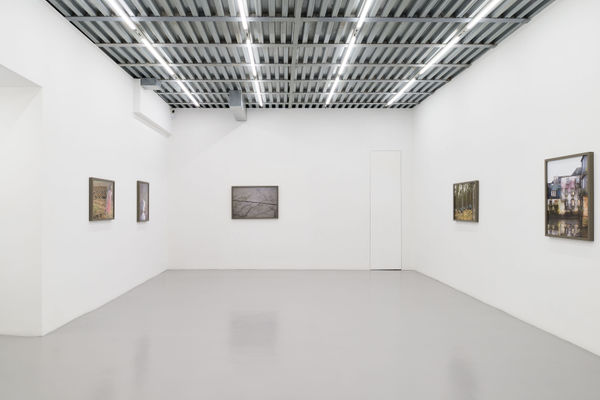
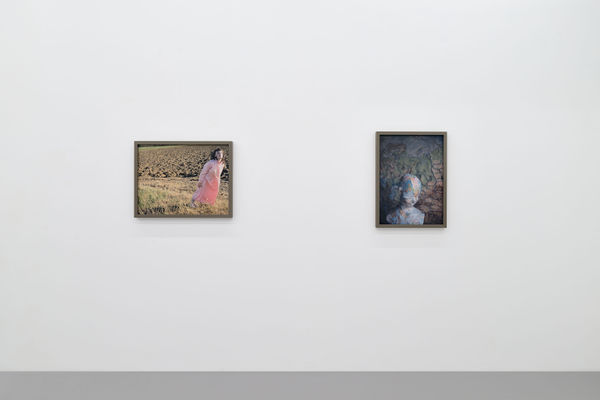
Installation View | Silvia Camporesi, Uno strappo nel cielo di carta, z2o Sara Zanin, 2026
-
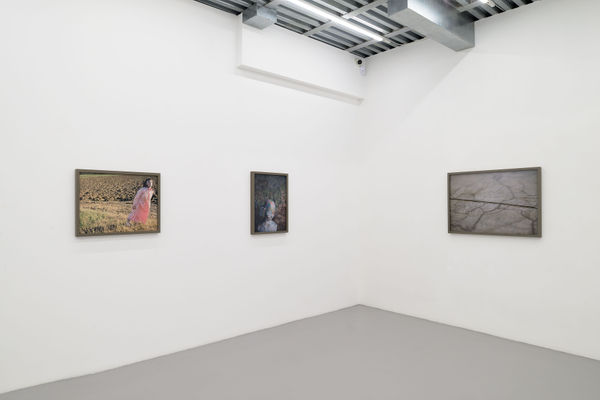
Installation View | Silvia Camporesi, Uno strappo nel cielo di carta, z2o Sara Zanin, 2026
Ph. Roberto Apa
-
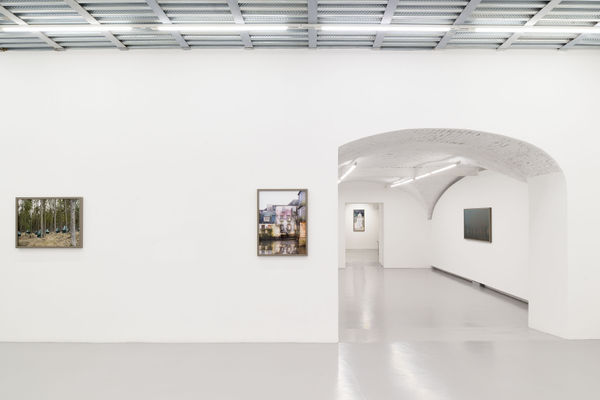
Installation View | Silvia Camporesi, Uno strappo nel cielo di carta, z2o Sara Zanin, 2026
Ph. Roberto Apa
-
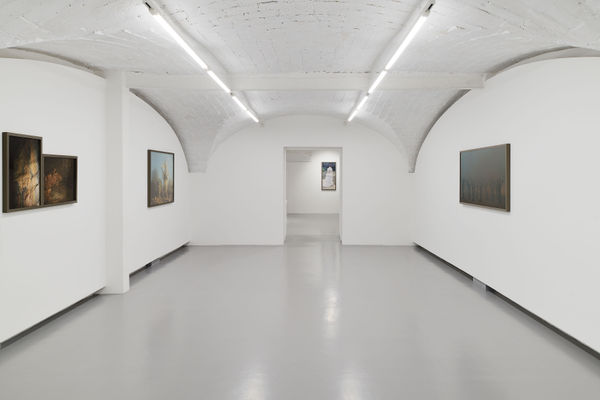
Installation View | Silvia Camporesi, Uno strappo nel cielo di carta, z2o Sara Zanin, 2026
Ph. Roberto Apa
-
Installation View | Silvia Camporesi, Uno strappo nel cielo di carta, z2o Sara Zanin, 2026
Ph. Roberto Apa
-
Installation View | Silvia Camporesi, Uno strappo nel cielo di carta, z2o Sara Zanin, 2026
Ph. Roberto Apa
-
Installation View | Silvia Camporesi, Uno strappo nel cielo di carta, z2o Sara Zanin, 2026
Ph. Roberto Apa
-
Installation View | Silvia Camporesi, Uno strappo nel cielo di carta, z2o Sara Zanin, 2026
Ph. Roberto Apa
-
Installation View | Silvia Camporesi, Uno strappo nel cielo di carta, z2o Sara Zanin, 2026
Ph. Roberto Apa
-
Installation View | Silvia Camporesi, Uno strappo nel cielo di carta, z2o Sara Zanin, 2026
Ph. Roberto Apa
-
Installation View | Silvia Camporesi, Uno strappo nel cielo di carta, z2o Sara Zanin, 2026
Ph. Roberto Apa
-
Installation View | Silvia Camporesi, Uno strappo nel cielo di carta, z2o Sara Zanin, 2026
Ph. Roberto Apa






-
Silvia Camporesi, Shimmering Cinecittà, 2024, Inkjet print on Hahnemühle FineArt Pearl paper mounted on Dibond, painted wooden frame, UV70 museum glass. Edition: 1/5 + 2 A.P, cm 80 × 60 (framed: cm 84 × 64).
Ph. Roberto Apa
Courtesy of the artist and z2o Sara Zanin
-
Silvia Camporesi, Shimmering Cinecittà, 2024, Inkjet print on Hahnemühle FineArt Pearl paper mounted on Dibond, painted wooden frame, UV70 museum glass. Edition: 1/5 + 2 A.P., cm 60 × 80 (framed: cm 64 x 84).
Ph. Roberto Apa
Courtesy of the artist and z2o Sara Zanin
-
Silvia Camporesi, Unheimlich, 2025, Inkjet print on Hahnemühle FineArt Pearl paper mounted on Dibond, painted wooden frame, UV70 museum glass. Edition: 1/5 + 2 A.P., cm 20 x 30 (framed: cm 24 x 34).
Ph. Roberto Apa
Courtesy of the artist and z2o Sara Zanin
-
Silvia Camporesi, Il sale del pensiero, 2005, Lambda vintage print (print from 2005), from 6 × 4.5 cm negative scan mounted on ultra-lightweight panel, painted wooden frame, UV70 museum glass. Edition: 1/4 cm 54 x 70 (framed: cm 58 x 74).
Ph. Roberto Apa
Courtesy of the artist and z2o Sara Zanin
-
Silvia Camporesi, Geotesta, 2005, Lambda vintage print (print from 2005), from a scanned 6 × 4.5 negative mounted on Dibond, painted wooden frame, UV70 museum glass. Edition: 3/4 cm 70 x 50 (framed: cm 74 x 54).
Ph. Roberto Apa
Courtesy of the artist and z2o Sara Zanin
-
Silvia Camporesi, Via dolorosa, 2005, Lambda vintage print (print from 2005), from a scan of a 6 × 4.5 negative, mounted on Dibond, painted wooden frame, UV70 museum glass. Edition: 2/4 cm 70 x 100 (framed: cm 74 x 104).
Ph. Roberto Apa
Courtesy of the artist and z2o Sara Zanin
-
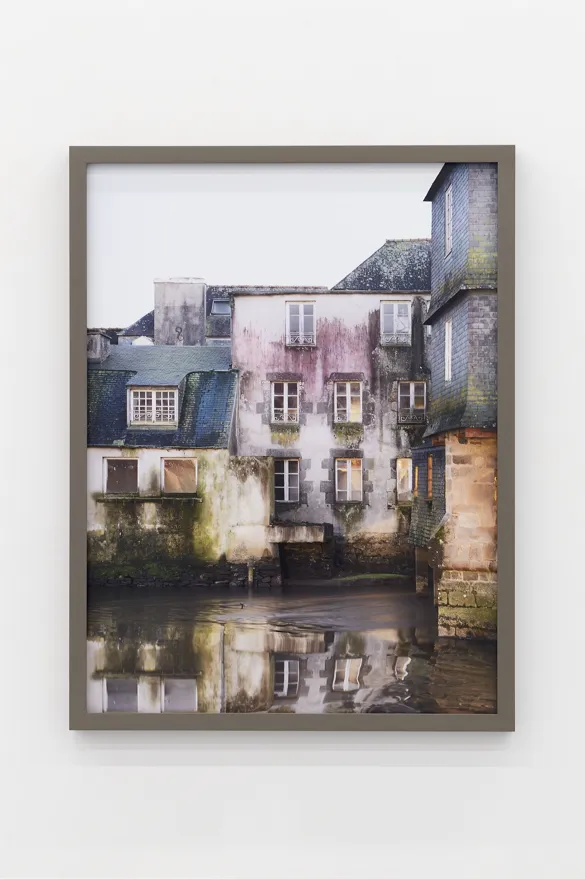
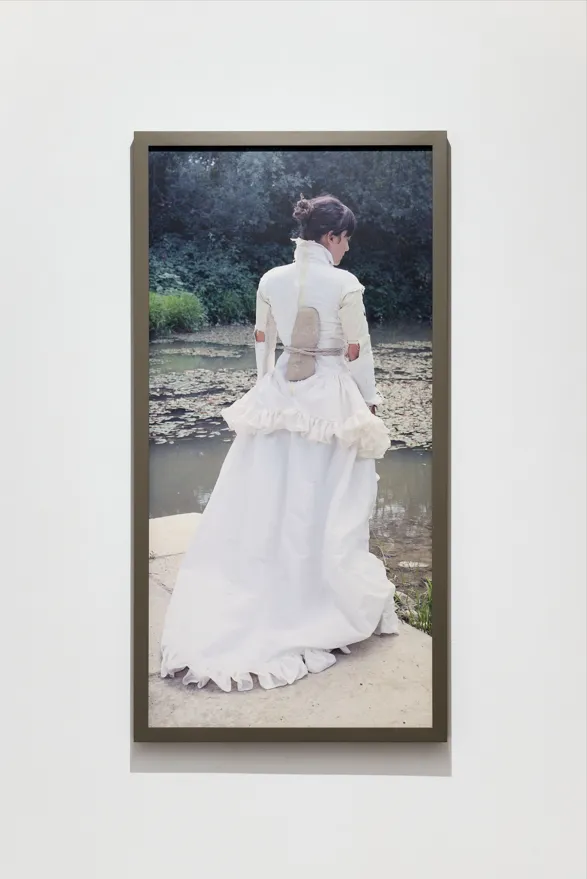
Silvia Camporesi, Pont de Rohan, 2025, Inkjet print on Hahnemühle FineArt Pearl paper, mounted on Dibond, painted wooden frame, UV70 museum glass. Edition: 1/5 + 2 A.P cm 80 x 60 (framed: cm 84 x 64).
Ph. Roberto Apa
Courtesy of the artist and z2o Sara Zanin
-
Silvia Camporesi, Kistefos Sculpture Park, 2025, Inkjet print on Hahnemühle FineArt Pearl paper mounted on Dibond, painted wooden frame, UV70 museum glass. Edition: 1/5 + 2 A.P. cm 60 × 80 (framed: cm 64 x 84).
Ph. Roberto Apa
Courtesy of the artist and z2o Sara Zanin
-
Silvia Camporesi, Shimmering Cinecittà, 2024, Inkjet print on Hahnemühle FineArt Pearl paper mounted on Dibond, painted wooden frame, UV70 museum glass. Edition: 1/5 + 2 A.P. cm 150 x 75 (framed: cm 154 x 79).
Ph. Roberto Apa
Courtesy of the artist and z2o Sara Zanin
-
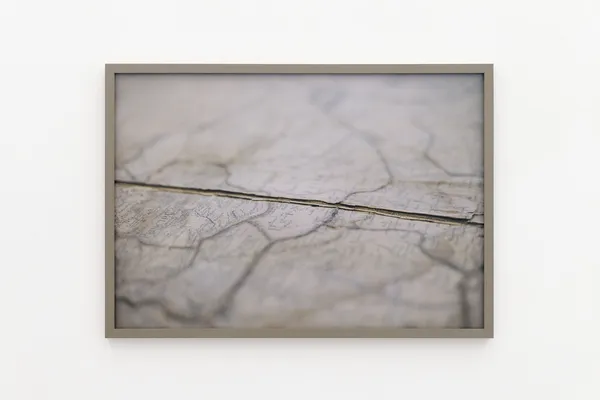
Silvia Camporesi, Unheimlich #2, 2025, Inkjet print on Hahnemühle FineArt Pearl paper mounted on Dibond, painted wooden frame, UV70 museum glass. Edition: 1/5 + 2 A.P. cm 30 x 40 (framed: cm 34 x 44).
Ph. Roberto Apa
Courtesy of the artist and z2o Sara Zanin
-
Silvia Camporesi, Onferno grotto, 2017, Inkjet print on Hahnemühle FineArt Pearl paper mounted on Dibond, painted wooden frame, UV70 museum glass. Edition: 1/5 + 2 A.P. cm 60 x 40 (framed: cm 64 x 44).
Ph. Roberto Apa
Courtesy of the artist and z2o Sara Zanin
-
Silvia Camporesi, Unheimlich #1, 2025, Inkjet print on Hahnemühle FineArt Pearl paper mounted on Dibond, painted wooden frame, UV70 museum glass. Edition: 1/5 + 2 A.P. cm 75 x 150 (framed: cm 79 x 154) and cm 50 x 100.
Ph. Roberto Apa
Courtesy of the artist and z2o Sara Zanin
-
Silvia Camporesi, After Baia, 2025, Inkjet print on Hahnemühle FineArt Pearl paper mounted on Dibond, painted wooden frame, UV70 museum glass. Edition: 1/5 + 2 A.P. cm 90 x 120 (framed: cm 94 x 124).
Ph. Roberto Apa
Courtesy of the artist and z2o Sara Zanin
-
Silvia Camporesi, Leggero-pesante, 2005, Lambda vintage print (print from 2005), from a scan of a 6 × 4.5 negative, mounted on Dibond, painted wooden frame, UV70 museum glass. Edition: 2/4. cm 100 x 50.
Ph. Roberto Apa
Courtesy of the artist and z2o Sara Zanin